The Unexpected Mental Health Benefits of Crochet (Science Says Your "Grandma Hobby" Is Actually Genius)
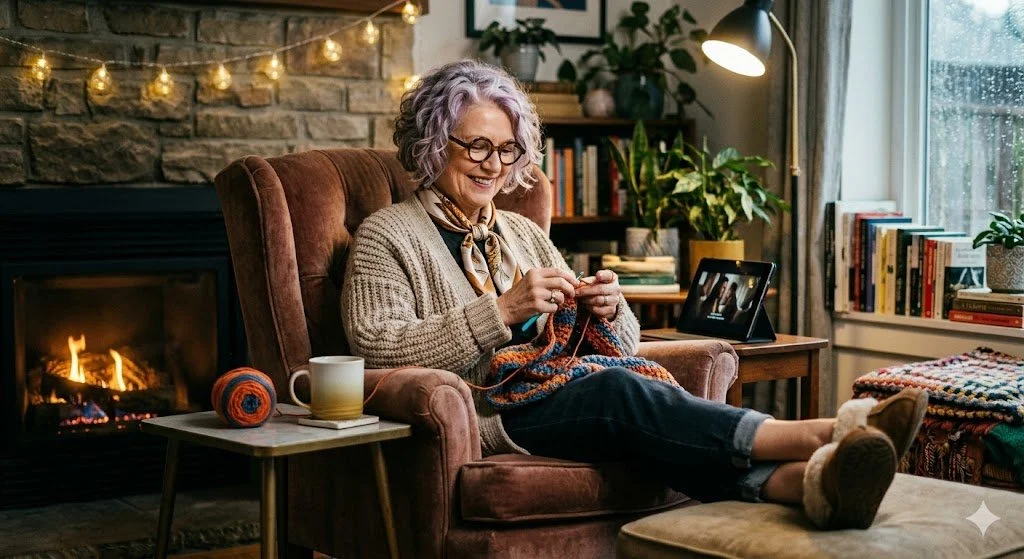
Okay, real talk. Have you ever told someone you spent your Friday night crocheting and watched their face do that thing? You know the thing, the polite smile, the tiny pause, the "oh… that's so…cute."
I'm here to tell you: you are the smartest person in that room.
Because while everyone else was doom-scrolling or stress-eating or lying awake at 2am catastrophizing about their email inbox, you were doing something that science, actual, peer-reviewed, published-in-journals SCIENCE, has proven to calm your nervous system, sharpen your brain, and make you genuinely happier.
Your "grandma hobby" is a whole wellness practice in disguise. And today we're blowing the lid off it.
Before We Dive In — My Favorite Crochet + Wellness Essentials
Because if you're going to treat crochet like the mental health ritual it is, you might as well do it right.
These are the exact things I personally use and love — and yes, some of these are affiliate links, which means I earn a small commission if you shop through them at no extra cost to you. It's how I keep this little corner of the internet running, so thank you!
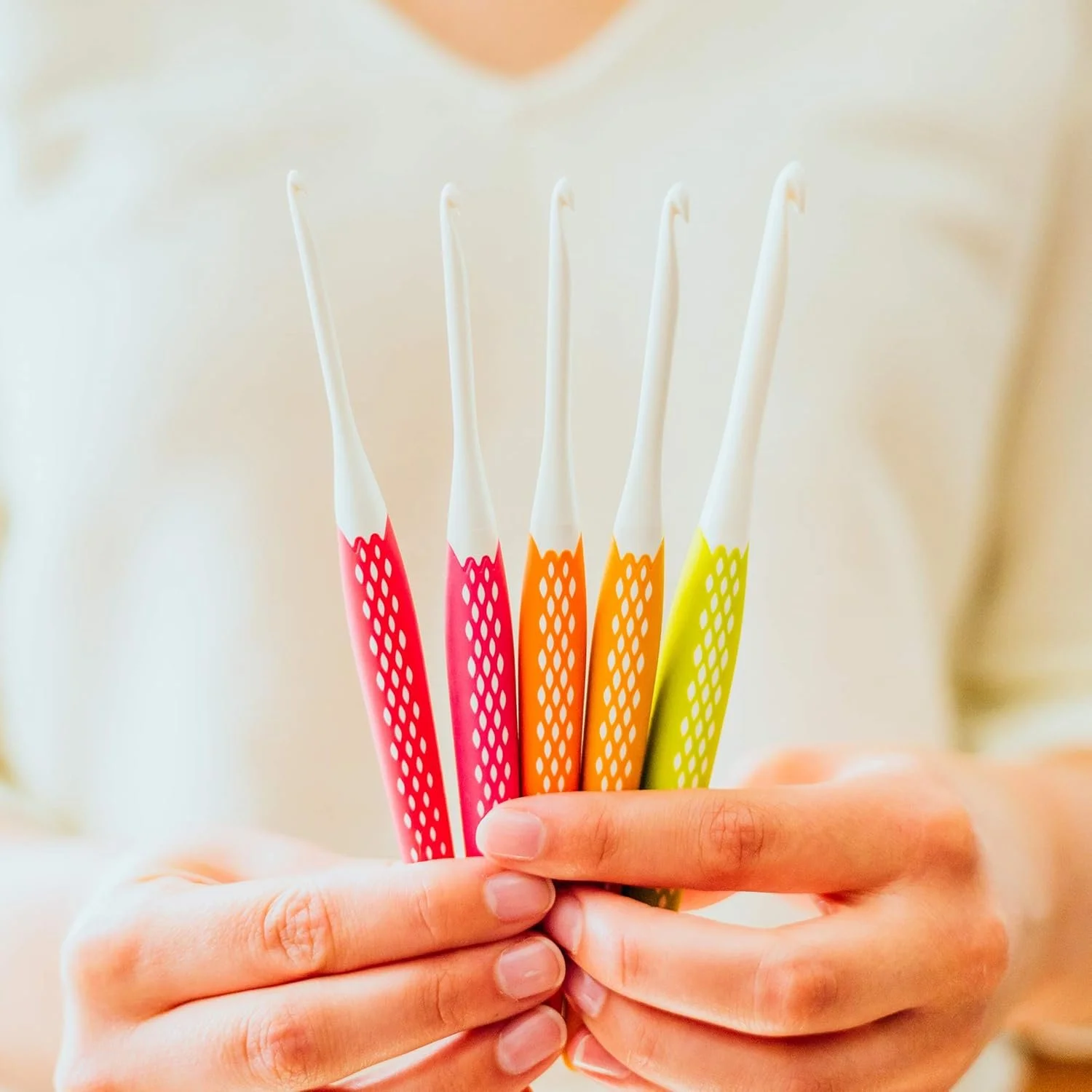
🧶 Prym Crochet Hook Set — ergonomic hooks that are an absolute GAME CHANGER for hand fatigue. Your wrists will write me a thank-you note.
🧺 Lion Brand Pound of Love Yarn — the softest, most satisfying yarn to work with. Therapeutic texture is real, friends.
📔 Crochet Project Planner & Journal — because tracking your creative wins is good for your brain (more on that below).
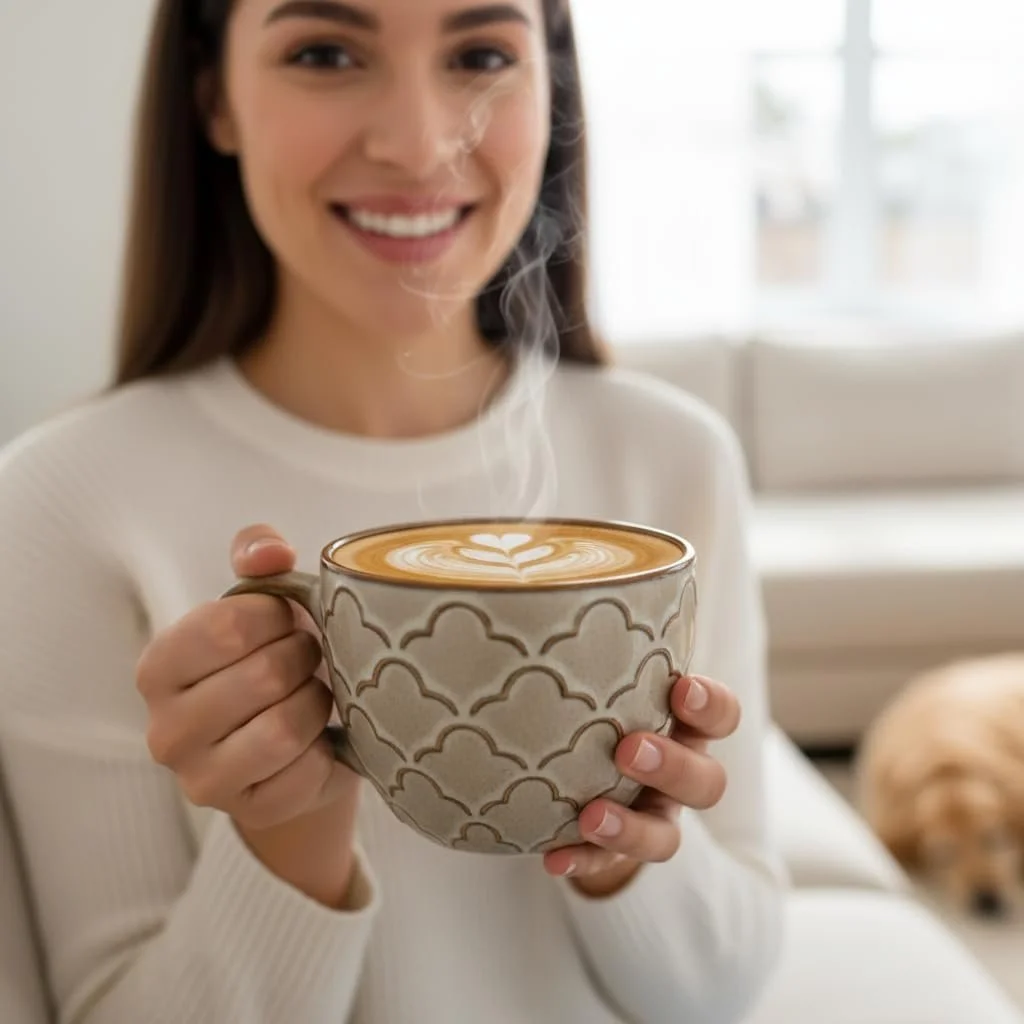
☕ Oversized Ceramic Mug (Perfect for Crocheting With) — obviously.
So… Why Are We All Suddenly Obsessed With "Grandma Hobbies"?
If you've noticed that embroidery kits, sourdough starters, and crochet hooks are absolutely everywhere right now — that's not an accident. Women (especially women 30–60) are burning out at record rates, and we are desperately, intuitively reaching for slow, tactile, repetitive activities that make us feel present.
Cottagecore? Quiet luxury? The "soft life" aesthetic? All of it points to the same collective hunger: we want to slow down, create something with our hands, and feel like ourselves again.
And here's what's wild — we've been instinctively reaching for exactly what the science recommends.
The Science-Backed Mental Health Benefits of Crochet
1. It Literally Puts Your Brain Into a Meditative State
Dr. Herbert Benson of Harvard Medical School called this the "relaxation response" — a state of deep rest that interrupts the fight-or-flight stress cycle. Crochet triggers it. Automatically.
It's basically a mindfulness practice with a cute finished object at the end. Can your yoga mat say the same? (No shade to yoga. I do yoga. But still.)
2. It Reduces Anxiety and Depression Symptoms
Research published in the Journal of Public Health found that crafting — including needlework — was associated with lower rates of depression and anxiety. Crochet specifically checks every box:
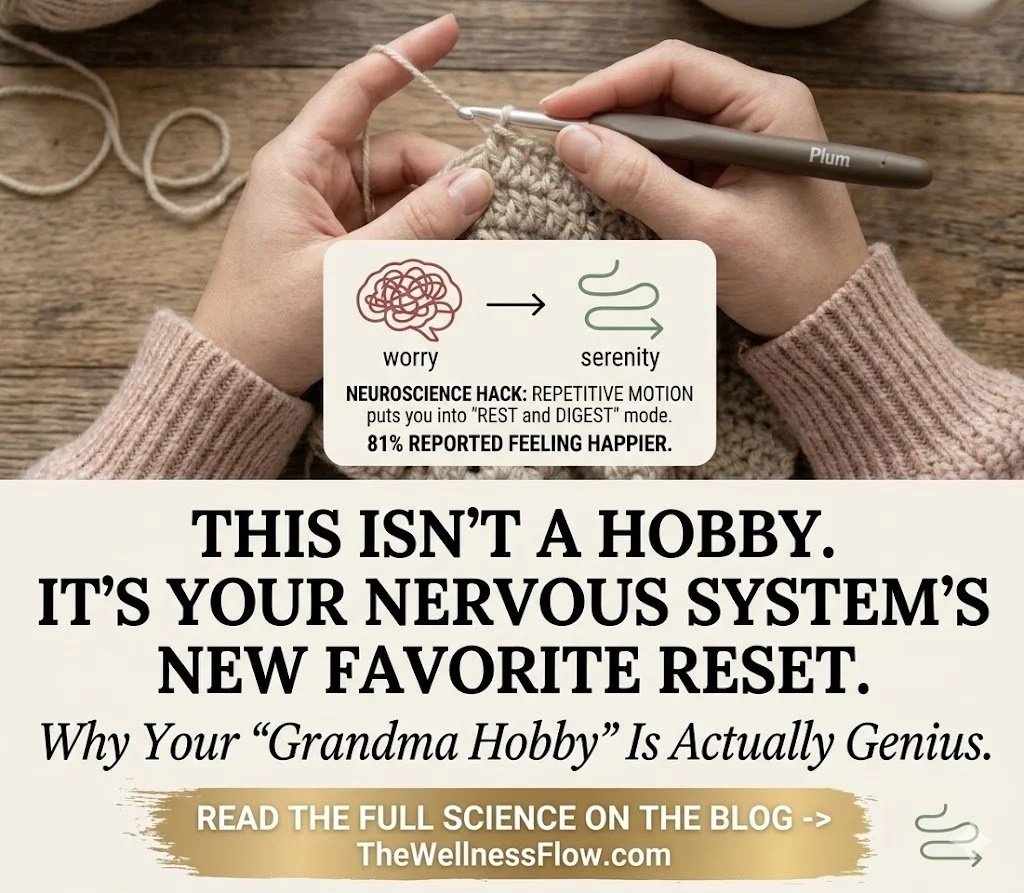
It's repetitive, which regulates the nervous system
It requires focused attention, which interrupts rumination (the mental habit of replaying worries on loop)
It produces dopamine (the reward chemical) every time you complete even a small section
That little hit of satisfaction when you finish a row? That's not just you being cute about yarn. That's your brain's reward system working exactly as designed.
A 2007 study from the Craft Yarn Council found that 71% of respondents who knit or crocheted during times of stress felt better afterward. Not "a little better." Better.
"Crochet is the only time my brain actually shuts up." — probably every woman reading this right now
3. It Protects Your Brain Long-Term (This One Is Wild)
The Mayo Clinic published research showing that engaging in crafts like knitting and crocheting was associated with a 50% reduced risk of developing mild cognitive impairment, an early marker for dementia compared to people who didn't engage in these activities.
Meanwhile your grandma has been sitting there with her yarn and her hooks, casually keeping her brain sharp, while everyone quietly judged her hobby. Grandma was built different.
The reason: crochet engages multiple areas of the brain simultaneously, pattern recognition, spatial reasoning, fine motor coordination, and sequential logic. It's essentially a workout for your neural pathways.
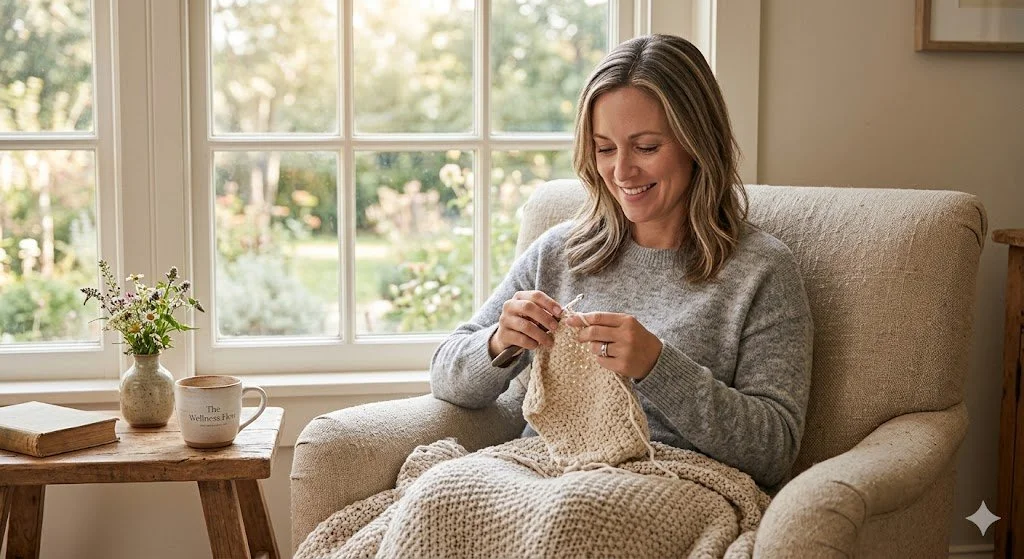
4. It Creates a "Flow State" — And Flow Is Basically the Holy Grail of Happiness
Psychologist Mihaly Csikszentmihalyi (try saying that three times fast) spent decades studying what makes humans genuinely happy. His answer? Flow. That deeply absorbed state where time disappears, self-consciousness drops, and you're just… in it.
Crochet is one of the most accessible pathways to flow available to us. It's complex enough to require focus, but rhythmic enough that it doesn't overwhelm. The result is that rare, delicious feeling of being completely present.
For busy women, moms, professionals, caregivers, all-of-the-above-ers, genuine presence is practically a luxury. Crochet gives it to you in 20-minute chunks on the couch.
👉 Speaking of 20 minutes — I wrote an entire post on how to use crochet as a quick mindfulness reset even on your craziest days. Check it out here: Crochet for Moms: 20-Minute Mindfulness Reset.
5. It Builds Something I Call "Completion Confidence"
Here's something that doesn't get talked about enough: when you're in a season of life where nothing feels finished — the to-do list resets daily, the laundry is eternal, the kids need you on a loop — crochet gives you a completed thing.
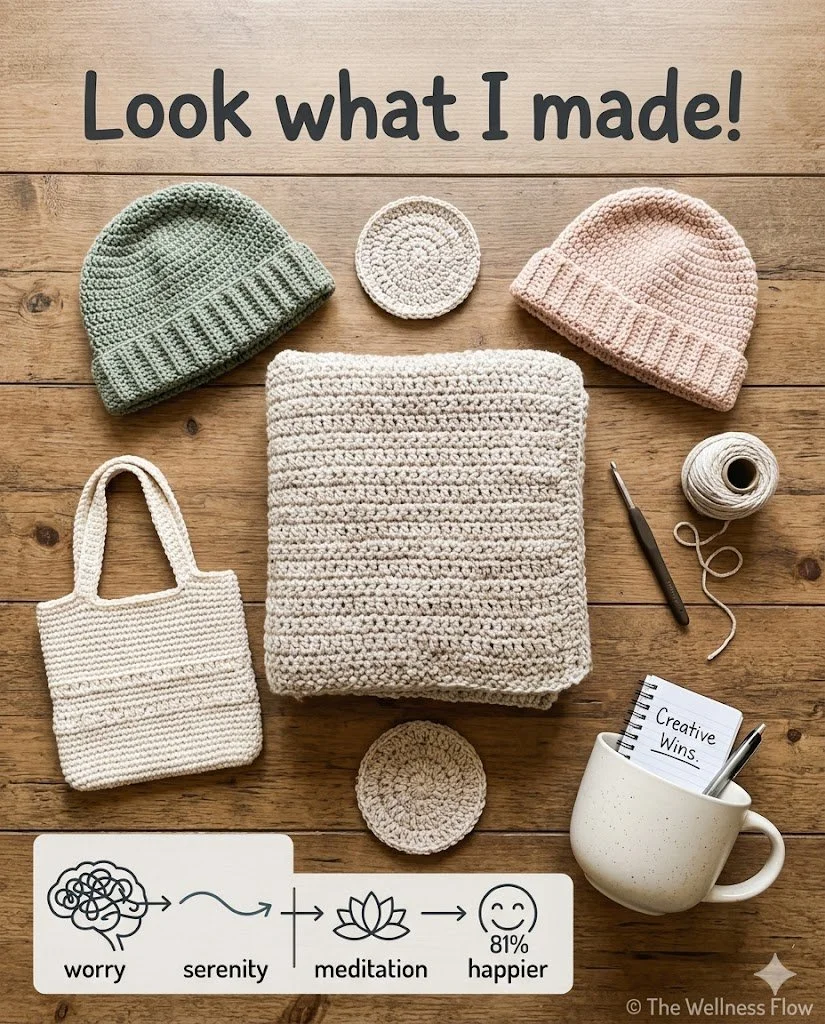
You made something. You can hold it. It's done. It's proof of your capability.
That might sound small. It is not small. Psychologists who study self-efficacy (your belief in your own competence) note that small, visible wins compound into genuine confidence over time. Every finished row, every blocked square, every completed hat is a data point your brain files under "I am someone who finishes things."
But Wait — What About the "Grandma" Thing?
Let's address it directly, because I know some of you are still slightly embarrassed to admit you crochet at a dinner party.
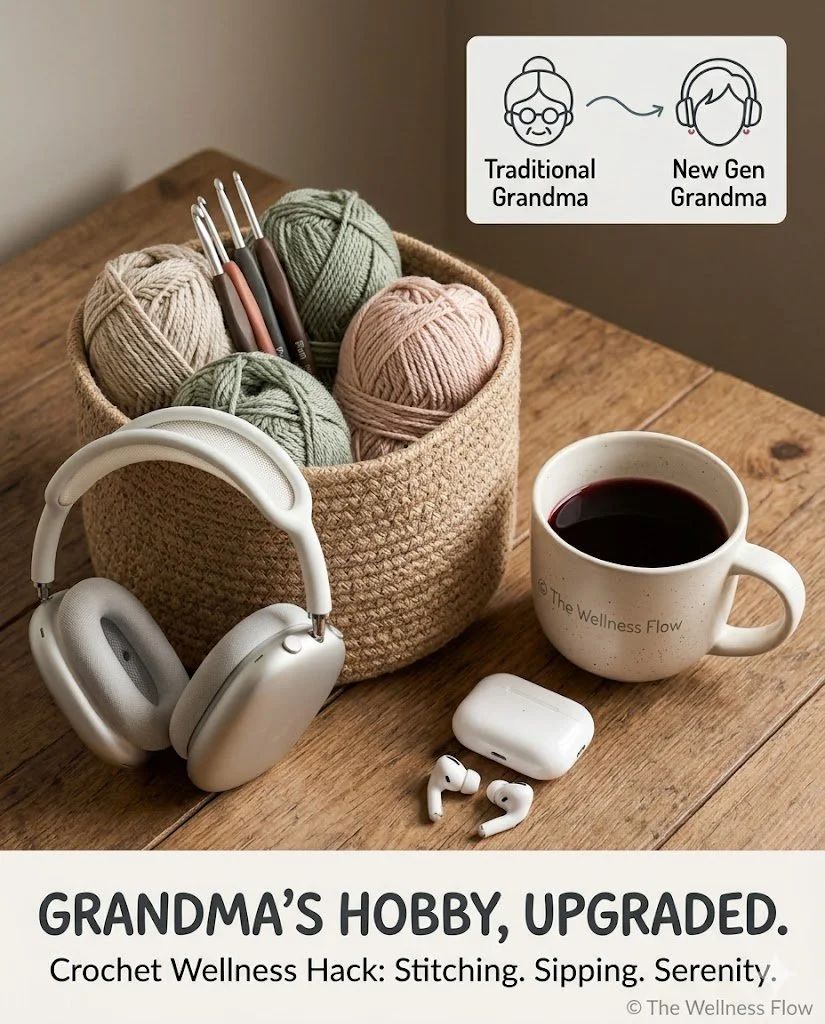
Here's what I want you to know: the "grandma hobby" framing is actually a compliment you've been conditioned to receive as an insult.
Our grandmothers crocheted because it was:
Affordable
Portable
Creative
Meditative
Social (stitch circles, anyone?)
Productive (actual useful items!)
That's not a dusty old-lady hobby. That's a genius life hack that predates the wellness industry by about 400 years.
The women who invented and passed down fiber arts knew what they were doing. They were coping with hard lives, staying sane, building community, and creating beauty from nothing. We're just finally catching up.
How to Make Crochet a Real Wellness Practice (Not Just a Hobby)
If you want to get the full mental health benefits, a little intentionality goes a long way. Here's how I approach it:
Set the scene. Light a candle. Make tea or pour a glass of wine. Put on a playlist or a comfort show in the background. Your environment matters for your nervous system. (The lavender candle I linked above is genuinely perfect for this.)
Phone face-down. Even 20 minutes of crochet with no scrolling is SO much more restorative than crochet with your phone in your lap. This is the hardest part and also the most important.
Track your projects. I am SERIOUS about this. Writing down what you made, when you finished it, and how it made you feel is a tiny journaling practice that compounds into real satisfaction over time. The project planner I linked has prompts built in and I love it.
Choose yarn that feels good. This sounds frivolous; it is not. Sensory experience matters. Scratchy yarn that you're fighting the whole time is not relaxing. Soft, satisfying yarn that you actually love touching? That's the difference.
Let it be imperfect. This is the biggest one. The mental health benefits of crochet do not require perfection. They require presence. A "wonky" blanket made with love is doing more for your nervous system than a technically perfect project made while spiraling about whether your tension is right.
The Bottom Line: Your Grandma Knew What She Was Doing
Science has officially confirmed what crafters have known for generations: putting a hook in your hands and working with yarn is genuinely, measurably good for your mental health.
It calms your nervous system. It protects your brain. It fights anxiety and depression. It creates flow states. It builds quiet, steady confidence. And it produces something beautiful at the end.
If that's a grandma hobby, then hand me my reading glasses and call me Nana. I am HERE for it.
Start Your Wellness Crochet Practice Today
Here's your starter kit — everything you need to make crochet your new favorite mental health habit:
🧶 Ergonomic Hook Set — protect your hands and wrists
🧺 Soft Beginner-Friendly Yarn — sensory matters
📔 Crochet Journal & Project Planner — track your wins
🕯️ Lavender Soy Candle — set the scene
☕ Oversized Cozy Mug — non-negotiable
Loved this post? Save it to Pinterest, share it with a friend who needs permission to slow down, and leave a comment below — I want to know: what's your go-to crochet project when you need to decompress?
And hey — if you're new here, welcome to The Wellness Flow. This is a space for creative, curious women building a life they actually love. I'm so glad you're here. 🤍
Sources referenced:
Riley, J. et al. (2013). Benefits of knitting for personal and social wellbeing in adulthood. British Journal of Occupational Therapy.
Craft Yarn Council Wellness Survey (2007).
Mayo Clinic Proceedings — Cognitive Activity and Risk of Cognitive Impairment (2013).
Csikszentmihalyi, M. (1990). Flow: The Psychology of Optimal Experience. Harper & Row.
Benson, H. (1975). The Relaxation Response. William Morrow.
Disclosure: This post contains affiliate links. If you purchase through my links, I earn a small commission at no additional cost to you. I only recommend things I genuinely love and use. Thank you for supporting The Wellness Flow!