The HIIT Workout That Keeps My ADHD Brain Happy (And My Sweat Levels Slightly Aggressive)
Affiliate Disclosure
This post may contain affiliate links, which means I may earn a small commission if you purchase through my links at no extra cost to you. I only recommend products I genuinely love, use, or dream about buying while convincing myself it’s “for my health.”
My Favorite High-End HIIT Gear
Here are three premium favorites that make HIIT workouts way more enjoyable:
Peloton Bike — My dream indoor bike for smooth, powerful sprint intervals.
WHOOP 5.0 — Amazing for recovery tracking, strain, sleep, and heart rate.
Theragun PRO Plus — Because recovery matters… especially after pretending you’re still 27.
The HIIT Protocol I Keep Coming Back To
If you’re someone who gets bored fast, distracted easily, or mentally checks out during long workouts…
HIIT might be your best friend.
And by HIIT, I mean High-Intensity Interval Training—short bursts of very hard work followed by recovery periods.
As someone whose brain likes novelty, urgency, and tiny countdown timers, HIIT works ridiculously well for me.
Give me:
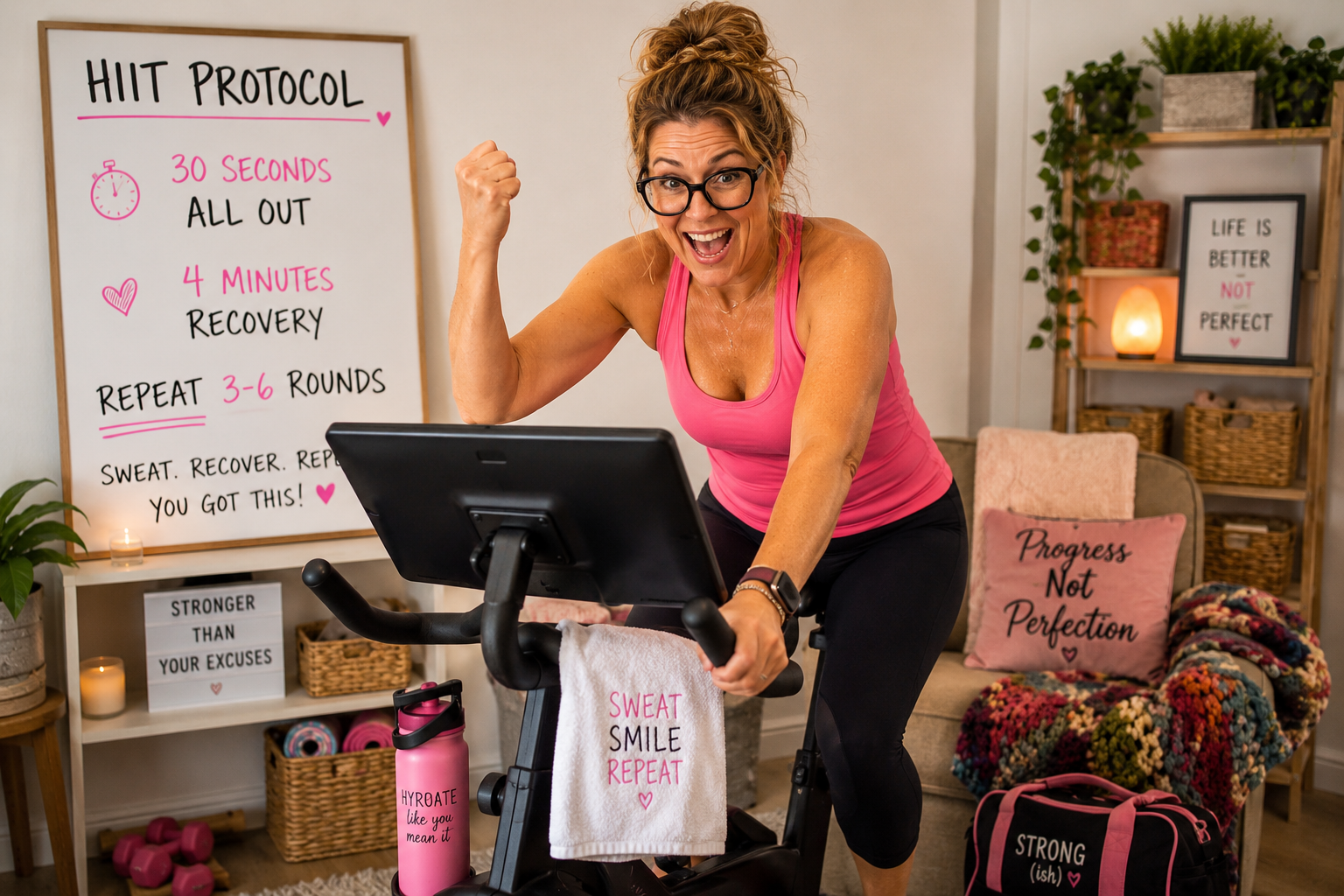
30 seconds of all-out effort
4 minutes of recovery
3–6 rounds
…and suddenly I’m locked in.
For whatever reason, tracking short intervals makes time fly.
I’m not staring at the clock wondering if 45 minutes have passed.
I’m focused on one thing:
Survive this sprint.
Then recover.
Then do it again.
Simple.
And the sweat?
Elite.
The Science Behind It
Much of modern interval training research was influenced by the work of Izumi Tabata, a Japanese researcher famous for studying intense interval training protocols.
His famous Tabata protocol used:
20 seconds all-out effort
10 seconds rest
Repeated for 8 rounds (4 minutes total)
His research found that short, brutally intense intervals improved both:
Aerobic fitness (cardiovascular endurance)
Anaerobic fitness (power/output)
That was a huge deal because traditional thinking suggested you needed long steady cardio for endurance and separate sprint training for power.
Turns out…
You can train both.
Later, researchers studying Sprint Interval Training (SIT) found something equally fascinating:
Very short, maximal-effort sprints followed by longer recovery periods can improve:
VO₂ max
Insulin sensitivity
Mitochondrial function
Cardiovascular health
Exercise efficiency
In normal human language?
Your body gets better at:
Using oxygen
Producing energy
Recovering faster
Burning fuel more efficiently
All while spending less time working out.
That’s my kind of science.
Why This Protocol Works So Well

The 30-second sprint + 4-minute recovery protocol works because it lets you go truly hard.
And I mean hard.
Not “kind of uncomfortable.”
I mean:
“Why did I choose this?” hard.
During the sprint, you recruit fast-twitch muscle fibers and challenge your cardiovascular system.
During recovery, your body works to:
Restore ATP (energy)
Clear lactate
Lower heart rate
Prepare for the next round
That long recovery period matters.
Without it, you can’t hit maximum power again.
And maximum power is where the magic happens.
Why HIIT Works So Well for My ADHD Brain

I love workouts.
I also get bored.
Fast.
Sometimes by minute 7 of a workout, my brain is already asking:
“What’s for dinner?”
“Did I answer that email?”
“Should I reorganize my craft room?”
“Wait… where is my water bottle?”
HIIT keeps me present.
Thirty seconds is short enough that my brain doesn’t wander.
Four minutes is long enough to recover without feeling rushed.
The rhythm feels satisfying.
It breaks exercise into tiny mental chunks.
And every round feels like a fresh start.
For an ADHD brain?
That structure can feel amazing.
Why I Love the Indoor Bike
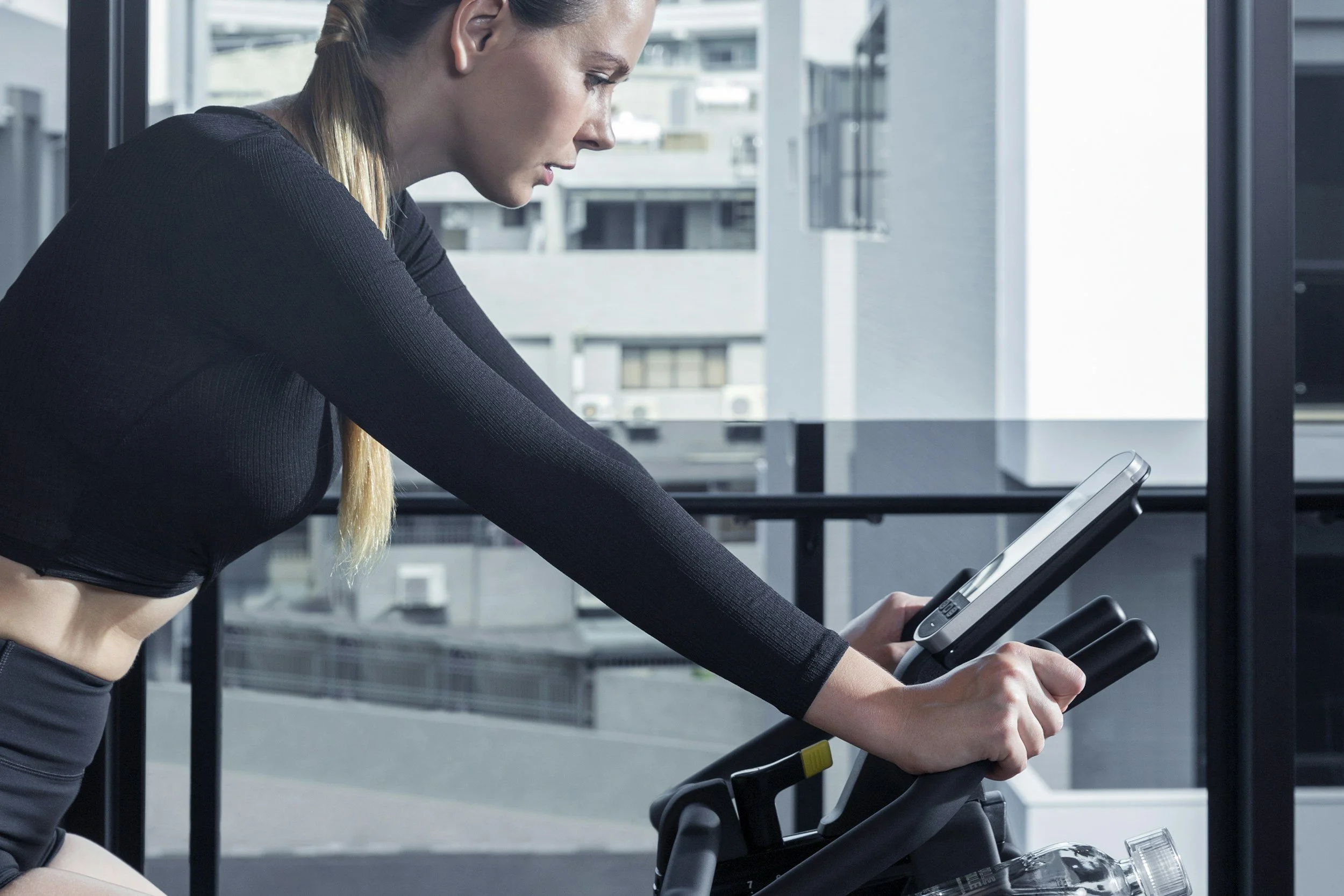
My personal favorite way to do this workout?
Indoor cycling.
I love sprinting.
But here’s the thing.
I am over 40.
And while my brain occasionally believes I’m still 23…
My hamstrings would like a word.
Sometimes sprinting outdoors awakens a level of competitive chaos in me that ends with:
“Wow, that felt amazing…”
…followed 12 seconds later by:
“Did I just pull a hamstring?”
Nothing humbles you like slowly aging.
The bike gives me the thrill of sprinting without quite as much injury risk.
I can go all out.
Push hard.
Get sweaty.
Feel powerful.
And ideally avoid explaining to my family why I injured myself “just running fast for fun.”
Common HIIT Protocol
Here’s a simple general protocol to follow.
Warm-Up (8–10 minutes)
Easy movement
Gradually raise heart rate
Add a few short accelerations
Main Set
Complete 3–6 rounds of:
Work Interval
30 seconds all out
Effort level: 9–10/10
Recovery Interval
4 minutes easy recovery
Effort level: 2–3/10
Cool Down (5–10 minutes)
Slow movement
Gentle stretching
Hydrate
Congratulate yourself
Very important final step.
Workout Option 1: Indoor Bike Sprints
Best for:
Low impact
Joint friendly
Maximum power
Protocol
Warm up 10 minutes.
Then:
Round 1–6
30 sec all-out sprint
4 min easy pedal
Cool down 5–10 minutes.
Focus on:
High cadence
Strong resistance
Full recovery between rounds
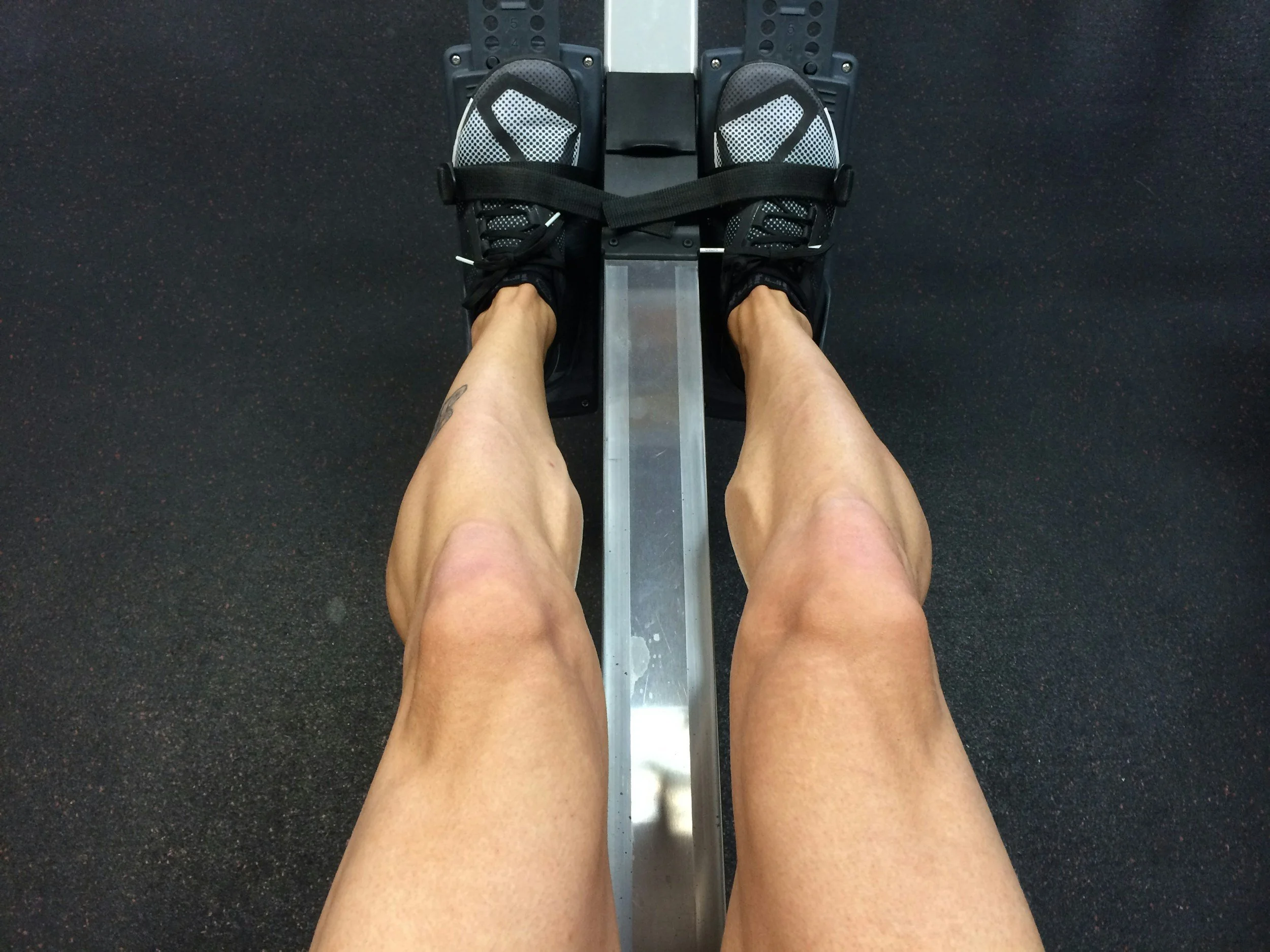
Workout Option 2: Rowing Machine Power Intervals
Best for:
Full body conditioning
Cardio + strength
Protocol
Warm up 8 minutes.
Then:
Round 1–5
30 sec maximum rowing effort
4 min easy row
Focus on:
Powerful leg drive
Strong pull
Smooth recovery
This one gets spicy fast.
Workout Option 3: Hill Sprint Intervals
Best for:
Explosive athletic power
Outdoor lovers
Protocol
Find a moderate hill.
Warm up thoroughly.
Then:
Round 1–4
Sprint uphill 30 sec
Walk down + recover 4 min
Important:
If you’re over 40 like me, warm up properly.
Your hamstrings deserve respect.
Final Thoughts
HIIT isn’t magic.
But it is efficient.
And for people who struggle with boredom, distractions, or long workouts…
It can be a game changer.
You don’t need an hour.
You don’t need fancy programming.
You just need short bursts of effort and enough recovery to repeat quality work.
For me, the combination of:
Short focus windows
Intense effort
Long recovery
Big sweat
makes this one of the most satisfying workouts I do.
And if you finish drenched in sweat but injury-free?
That’s what I call winning.