7 Things Every College Freshman Needs in Their Dorm for Better Mental Health (Backed by Science!)
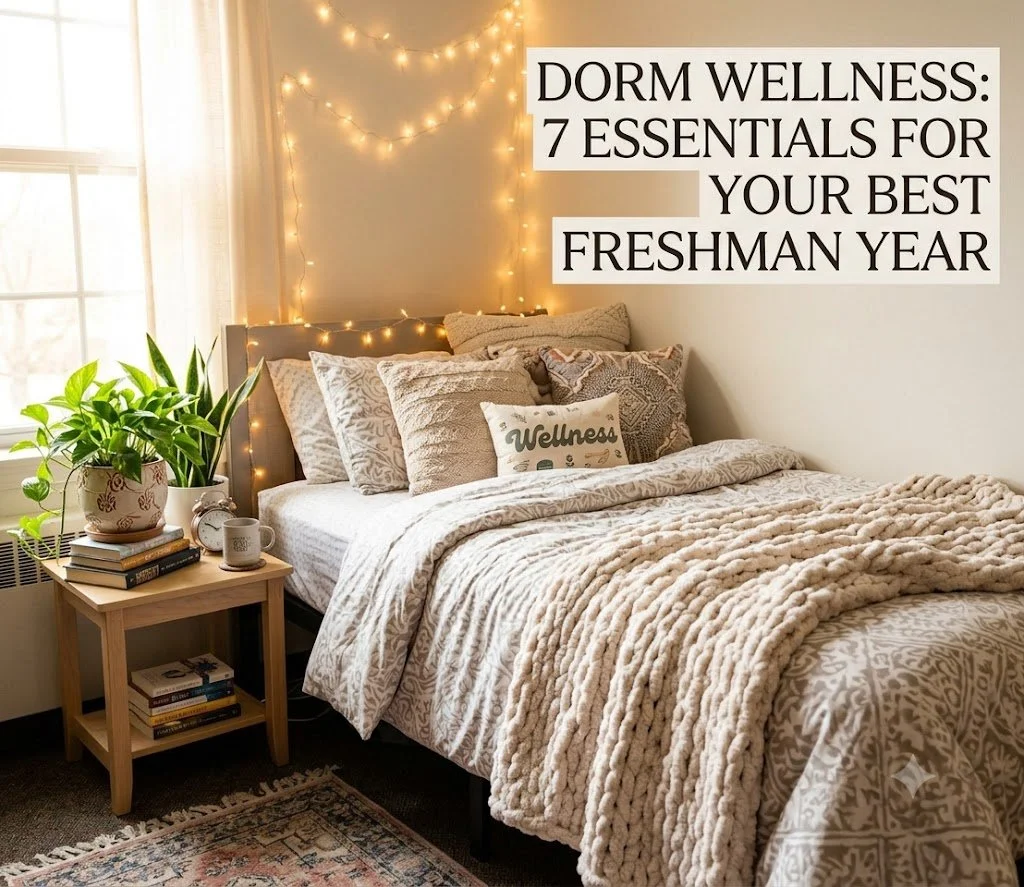
Hey girl, hey! 👋
If you've got a freshman heading off to college this fall (or if that freshman is you), let's talk about something nobody puts on the dorm checklist: mental health.
Everyone's out here buying shower caddies and command hooks (necessary, yes) but nobody's talking about how that tiny 10x12 box is about to become your entire world for the next nine months — and what you put in it can genuinely make or break how you feel every single day.
So I did the research, because that's what I do. Here are 7 things to put in your dorm room that are actually backed by science to support your mental health, not just Pinterest-pretty (though, bonus, they are that too).
Affiliate Disclosure: This post contains affiliate links, including Amazon Associate links. If you click through and make a purchase, I may earn a small commission at no extra cost to you. I only recommend products I genuinely believe in thank you for supporting The Wellness Flow!
Shop My Dorm Mental Health Essentials:
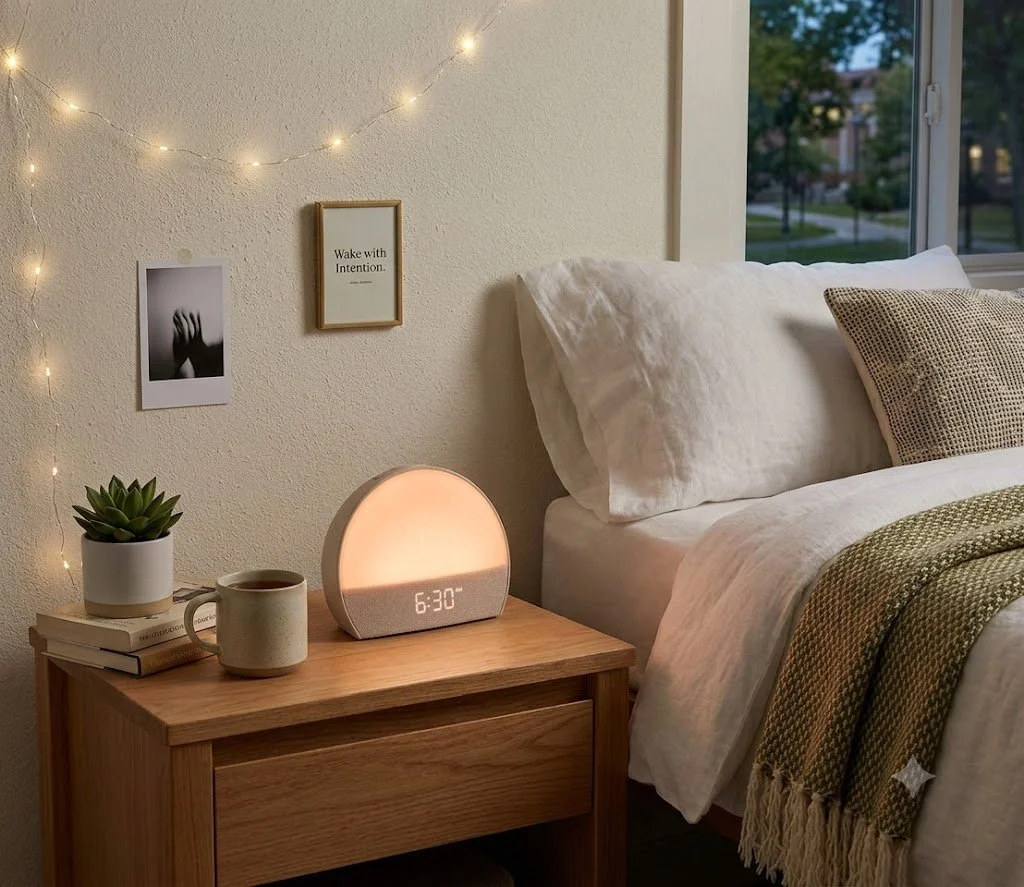
1. A Sunrise Alarm Clock (aka a Light Therapy Lamp)
Dorm rooms are notoriously light-deprived thick blackout blinds, a roommate who sleeps till noon, a window that faces a brick wall (we've all been there). But your brain needs light, and when it gets that light, to regulate mood.
The science: Your circadian rhythm the internal clock that governs sleep, mood, and energy is directly regulated by light exposure, especially in the morning. Research on light therapy consistently shows it's effective not just for seasonal affective disorder, but for general mood regulation and sleep-wake alignment, which matters enormously during a season of life (freshman year) already packed with disrupted sleep schedules.
Try it: A sunrise alarm clock simulates a natural sunrise 20-30 minutes before your alarm, so your body starts producing cortisol (the good, wake-up kind) gradually instead of getting jolted awake by a phone blaring at 8am.
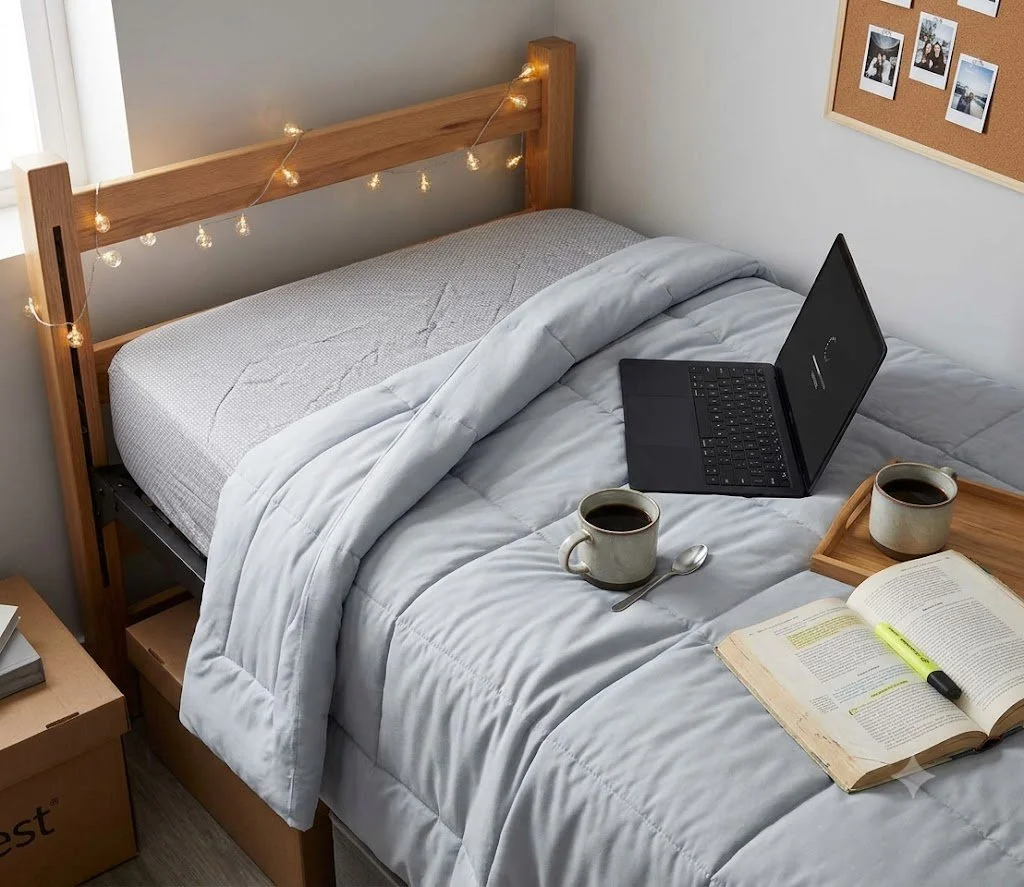
2. A Weighted Blanket
This one feels like a cozy dorm accessory, but it's genuinely one of the most researched anxiety-reduction tools you can put on a bed.
The science: Weighted blankets work through something called Deep Pressure Stimulation (DPS) the gentle, even pressure is thought to increase serotonin and melatonin while lowering cortisol, similar to the physiological effect of a hug. Studies on weighted blankets for anxiety and sleep have found participants report significantly reduced anxiety and improved sleep quality when using them, particularly during high-stress periods — and let's be honest, freshman year is a high-stress period.
Try it: Look for one that's roughly 10% of your body weight for the best effect.
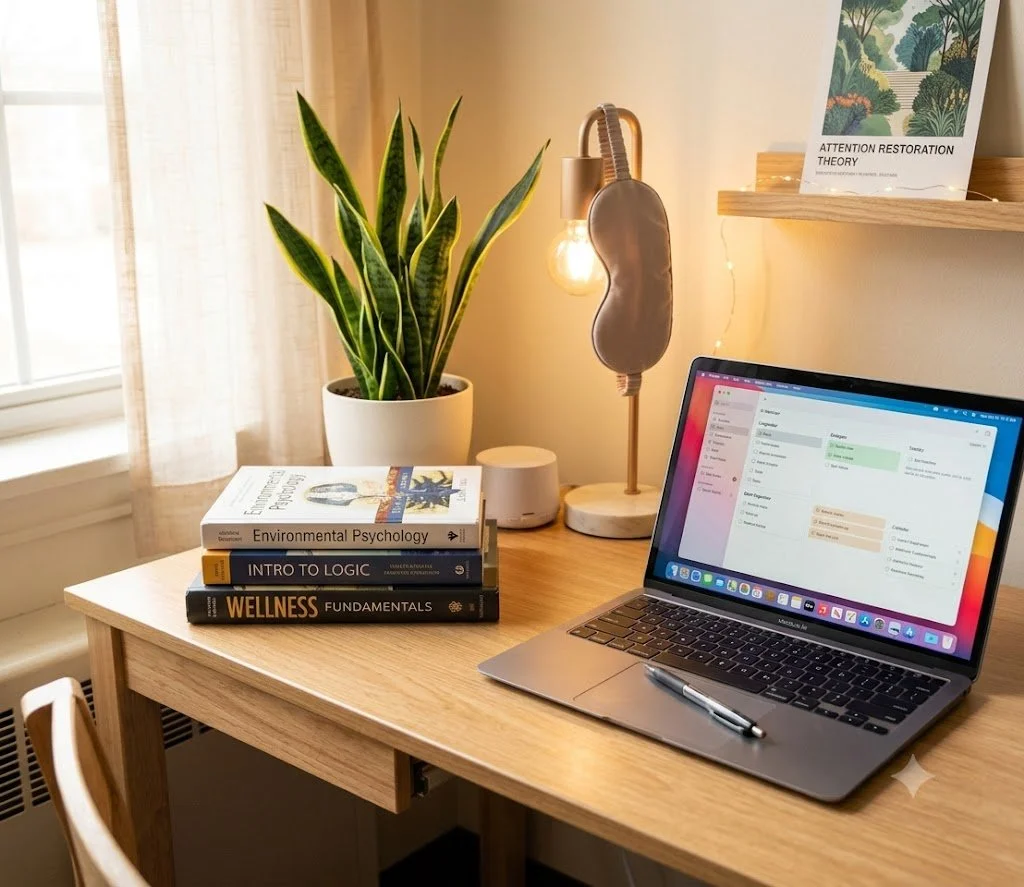
3. An Air-Purifying Plant
I know, I know — a plant feels like the least "mental health tool" item on this list. But hear me out.
The science: Environmental psychology research (rooted in Attention Restoration Theory and Stress Recovery Theory) has repeatedly shown that exposure to greenery even small, potted greenery lowers cortisol and blood pressure and improves mood and attention compared to environments without plants. NASA's well-known Clean Air Study also found certain houseplants can reduce indoor air pollutants, and cleaner air is linked to better cognitive function and lower fatigue.
Try it: Pothos and snake plants are nearly impossible to kill (freshman-proof) and both made NASA's air-purifying list.
4. Blackout Curtains (or a Really Good Sleep Mask)
Dorm sleep schedules are chaos — hallway lights, roommates on different schedules, streetlights outside. None of that is good for your brain.
The science: Sleep quality and mental health are deeply intertwined — poor sleep is both a symptom and a driver of anxiety and depression, and light exposure at night is one of the biggest disruptors of the deep sleep your brain needs to regulate emotion the next day. Even small amounts of light during sleep have been linked to worse next-day mood and impaired emotional processing in research on sleep and affect.
Try it: If your dorm doesn't allow curtain installation, a contoured sleep mask is a great (RA-approved) workaround.

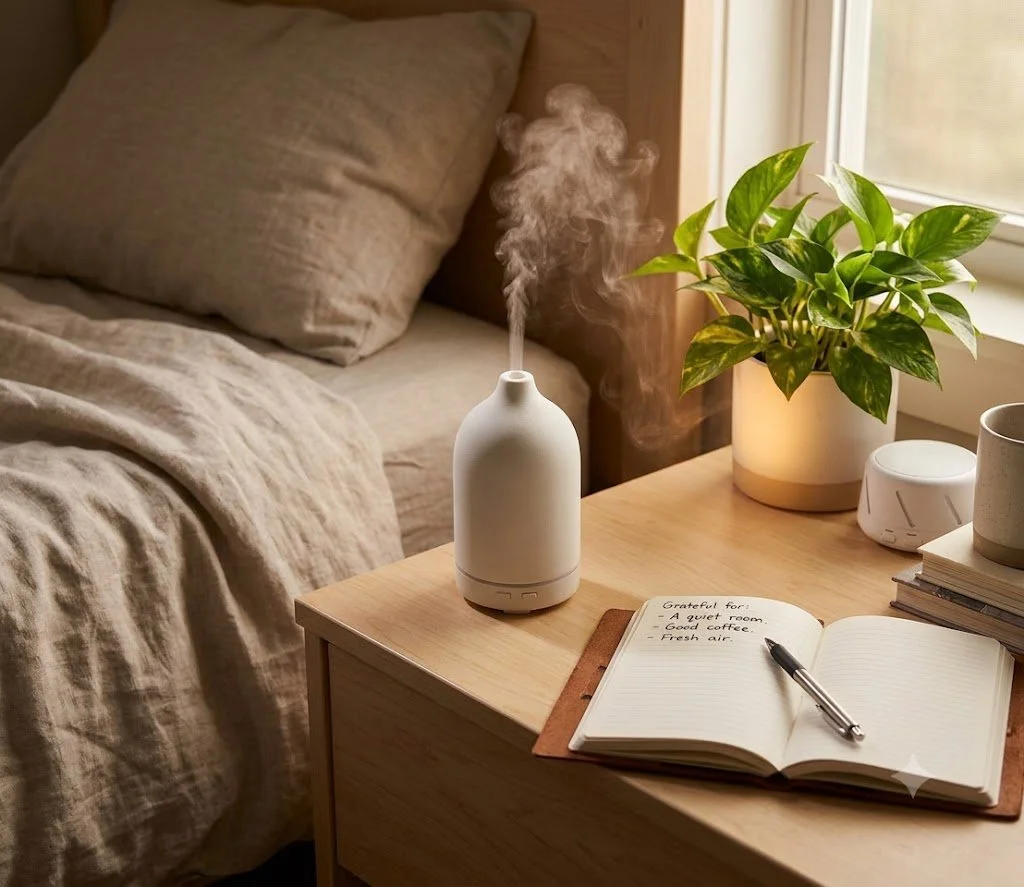
5. An Essential Oil Diffuser (Lavender, Specifically)
This is the "girlfriend, trust me" item on the list and the research actually backs it up.
The science: Multiple clinical studies on lavender aromatherapy have found it reduces self-reported anxiety and lowers physiological stress markers like cortisol and heart rate, particularly in high-stress situational contexts (like, say, finals week). It's not a replacement for real anxiety treatment, but as a low-effort daily ritual, it genuinely has data behind it.
Try it: Run it for 30 minutes before bed as part of a wind-down routine the ritual itself helps signal to your brain that it's time to relax.
6. A White Noise Machine
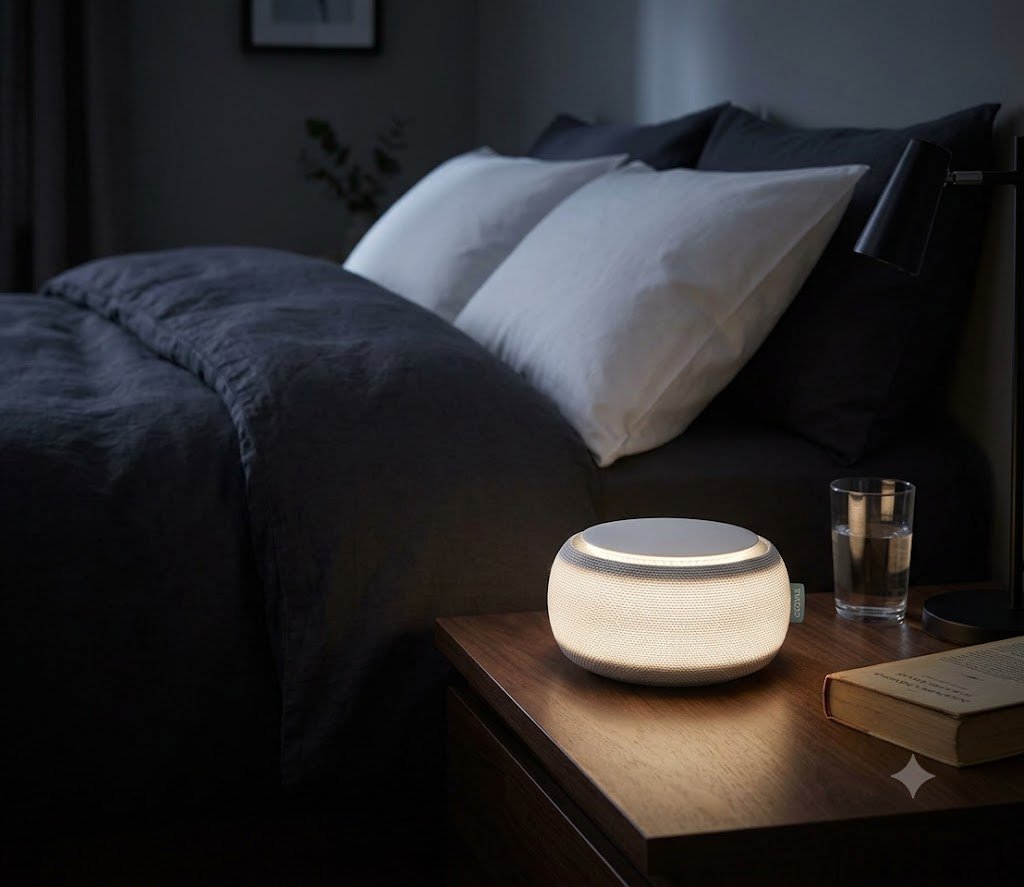
Dorm walls are thin. Dorm hallways are loud. Your roommate's 2am phone calls are a lot.
The science: Sleep research shows that consistent background noise (white or pink noise) can mask disruptive environmental sounds and reduce the number of nighttime awakenings, leading to more consolidated, restorative sleep. Since sleep fragmentation is strongly linked to next-day irritability, anxiety, and difficulty concentrating, a white noise machine is a genuinely low-cost, high-impact tool for a noisy dorm environment.
Try it: Look for one with a fan sound or brown noise option research suggests lower-frequency sounds are often more effective at masking disruptive noise than higher-pitched white noise.
7. A Gratitude Journal (or a Photo Wall of Your People)
Last one, and it's less about "stuff" and more about a habit but it deserves a spot on this list just as much.
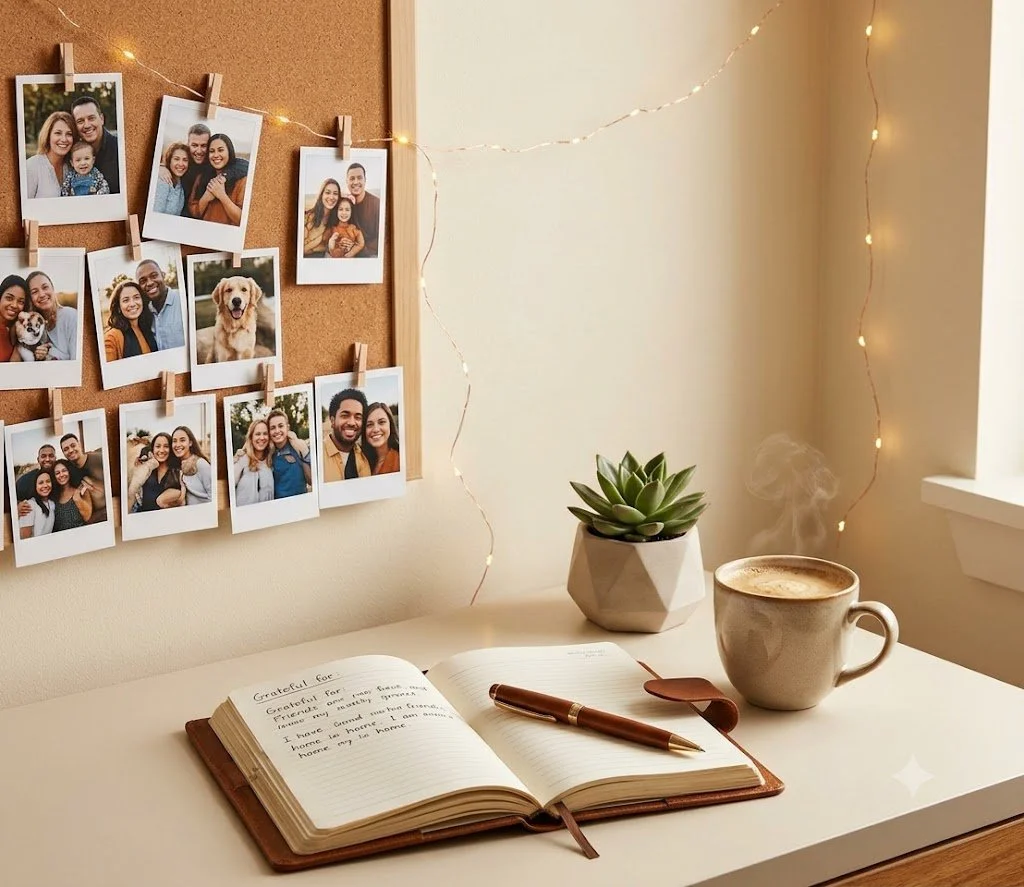
The science: Positive psychology research (most famously studies by Emmons and McCullough) has found that people who regularly practice gratitude journaling report significantly higher wellbeing, better sleep, and lower stress than those who don't. Separately, research on social connection consistently shows that visual reminders of supportive relationships — photos of family and friends — can reduce feelings of loneliness, which is one of the single biggest predictors of poor mental health in college freshmen specifically.
Try it: Keep the journal on your nightstand and write 3 things you're grateful for before bed. If journaling isn't your thing, a cork board or photo wall of your people works through the same connection-boosting mechanism.
Quick Recap: Your Dorm Mental Health Checklist
🌙 Blackout curtains or sleep mask
Moving into a dorm is a huge transition, and nobody really tells you how much your physical space affects your mental space. Start with even one or two of these, and build from there.
You've got this, freshman year survivor. 💛
xo, Marie